



Lost Password

News

Data Center
Educational Article

The Critical Role of Enclosures in Data Center Sustainability

This article examines the environmental impact of data centers and the industry’s crucial shift from traditional “white space” designs to sustainable green building practices. It explores how renewable energy adoption and eco-friendly materials can reduce both carbon footprints and operational costs while meeting regulatory requirements. The piece underscores that meaningful sustainability requires collective action from all industry stakeholders.
An article by Gordon Johnson, Subzero Senior CFD Manager

The Environmental Cost

As essential as data centers are to our increasingly digital lives, they come at a huge environmental cost to our planet.

It doesn’t help that much of the energy required to power them is still sourced from fossil fuels. It’s one of the reasons that the industry has been identified as a major contributor to climate change.

Given the growing environmental concerns, it is now an urgent necessity to transition to sustainable, renewable energy sources, energy-efficient technologies, and recyclable materials. To impose the importance of net-zero, governments and regulatory bodies worldwide are seeking to implement stricter environmental policies to meet global climate goals.

The adoption of sustainable design ensures adherence to these regulations. Furthermore, as sustainability becomes a crucial component of corporate social responsibility (CSR) for many organizations and more consumers and businesses are favoring companies with strong environmental commitments, a strong sustainability policy can yield a competitive advantage in a tough marketplace.

Transitioning from White to Green

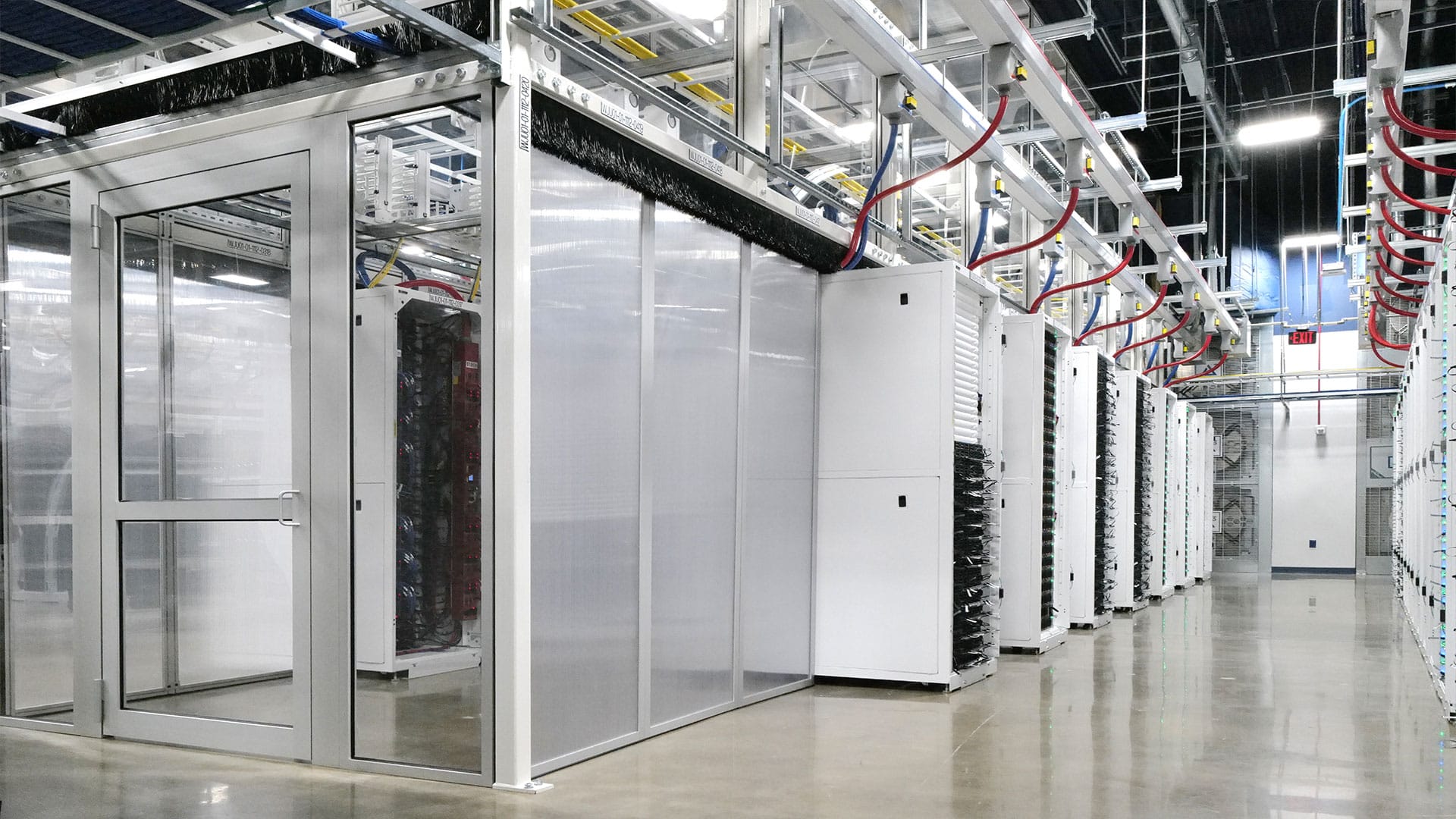
White space, as it relates to data centers, is the space inside a building devoted to IT hardware, such as servers, storage, and networking components. It is a highly controlled environment with restricted access, monitored for temperature, humidity, and other factors critical to maintaining the health of IT systems.

Increasing demand for data center performance and capacity while at the same time reducing operating costs requires an efficient use of white space. What could the transformation from white space to green building offer? And can it still deliver on operational excellence?

Incorporating renewable energy sources and embracing natural power supplies such as wind or solar, enables operational efficiencies to be raised, cooling requirements reduced, and CO2 emissions to be significantly reduced. In addition, construction using recycled and recyclable materials also supports global initiatives in combating climate change, reducing waste, and lowering greenhouse gas emissions.

Green Building Certifications

According to the U.S. Office of Energy Efficiency and Renewable Energy, data centers are one of the most energy-intensive building types, consuming 10 to 50 times the energy per floor space of a typical commercial office building. This energy consumption is only expected to increase due to high intensity emerging technologies such as artificial intelligence (AI), blockchain and cryptocurrency.

Global green building certifications, such as Leadership in Energy and Environmental Design (LEED), are heralding a new era of environmentally sustainable practices. These certifications set a framework for integrating recycled and recyclable materials with measurable benchmarks for sustainability, energy efficiency and environmental stewardship.

Globally recognized green building certifications and standards that evaluate the environmental impact and performance of buildings are essential in promoting environmentally conscious design in contemporary infrastructure. Internationally recognized indicators give data centers the means to demonstrate their commitment to minimizing environmental impact, and set a bar for best practice in sustainable construction and operation. This encourages industry-wide adoption, opening the door for a more sustainable future.

Balancing Costs and Sustainability

Transitioning to greener materials and practices offers significant environmental benefits, but it also raises questions about cost. Does the investment in recyclable, green materials balance the return on investment?

Upfront costs of adopting green building practices are indeed high, particularly in legacy data centers, but the long-term financial benefits are indisputable. Over time, utilizing energy-efficient designs and systems can lead to a lower total cost of ownership (TCO) by reducing power and operational expenses.

Integrating renewables can also decrease organizations’ reliance on fossil fuels, helping them to better manage any future energy challenges. Additionally, data centers that actively pursue net-zero initiatives can enhance their brand perception by complying with regulations, benefiting from a value that is difficult to quantify.

These benefits justify the initial investment. When evaluating costs concerning TCO, the argument for both financial and environmental sustainability is compelling.

The Power of Collective Responsibility

While data centers have an unavoidable influence on the environment, the industry is quickly establishing itself as a leader in environmental sustainability by implementing a variety of net-zero strategies. However, all industry stakeholders need to play a role in the collective accountability for an environmentally friendly future.

Partnerships are integral to this collaborative approach. From operators adopting renewable energy sources to designers innovating with eco-friendly materials, investors funding sustainability projects to policymakers incentivizing green practices; we are all answerable in the acceleration of sustainable operation.

Setting an Example

Taking decisive action is the first step to sustainability. The choice of being a sustainability leader yields benefits beyond the environment; it brings about a positive change chain reaction, a ripple effect across all industries. Positive transformation inspires and influences all sectors and markets. Adopting this role of responsibility leverages a legacy of accountability and investment in sustainability, with the long-lasting positive impact on the globe to be enjoyed by the next-generation of technology entrepreneurs.

About the writer 
Gordon Johnson is the Senior CFD Engineer at Subzero Engineering and is responsible for planning and managing all CFD related jobs in the U.S. and worldwide. He has over 35 years of experience in the data center and cleanroom industry which includes data center energy efficiency assessments, data center design, CFD modeling for both cleanrooms and data centers, and disaster recovery. He is a certified U.S. Department of Energy Data Center Energy Practitioner (DCEP), a certified Data Centre Design Professional (CDCDP), and holds a Bachelor of Science in Electrical Engineering from New Jersey Institute of Technology. Gordon also brings his knowledge and ability to teach the fundamentals of cleanroom and data center design and energy efficiency to numerous public speaking events annually, white papers, and industry leading researched articles worldwide.
Data Center
Educational Article

The Transition From White Space to Green Building

Data centers must transition from energy-intensive “white space” to sustainable green building designs to reduce environmental impact, cut long-term costs, and inspire positive change across industries through collective stakeholder action.

An article by Gordon Johnson, Subzero Senior CFD Manager

The Environmental Cost

As essential as data centers are to our increasingly digital lives, they come at a huge environmental cost to our planet.

It doesn’t help that much of the energy required to power them is still sourced from fossil fuels. It’s one of the reasons that the industry has been identified as a major contributor to climate change.

Given the growing environmental concerns, it is now an urgent necessity to transition to sustainable, renewable energy sources, energy-efficient technologies, and recyclable materials. To impose the importance of net-zero, governments and regulatory bodies worldwide are seeking to implement stricter environmental policies to meet global climate goals.

The adoption of sustainable design ensures adherence to these regulations. Furthermore, as sustainability becomes a crucial component of corporate social responsibility (CSR) for many organizations and more consumers and businesses are favoring companies with strong environmental commitments, a strong sustainability policy can yield a competitive advantage in a tough marketplace.

Transitioning from White to Green

White space, as it relates to data centers, is the space inside a building devoted to IT hardware, such as servers, storage, and networking components. It is a highly controlled environment with restricted access, monitored for temperature, humidity, and other factors critical to maintaining the health of IT systems.

Increasing demand for data center performance and capacity while at the same time reducing operating costs requires an efficient use of white space. What could the transformation from white space to green building offer? And can it still deliver on operational excellence?

Incorporating renewable energy sources and embracing natural power supplies such as wind or solar, enables operational efficiencies to be raised, cooling requirements reduced, and CO2 emissions to be significantly reduced. In addition, construction using recycled and recyclable materials also supports global initiatives in combating climate change, reducing waste, and lowering greenhouse gas emissions.

Green Building Certifications

According to the U.S. Office of Energy Efficiency and Renewable Energy, data centers are one of the most energy-intensive building types, consuming 10 to 50 times the energy per floor space of a typical commercial office building. This energy consumption is only expected to increase due to high intensity emerging technologies such as artificial intelligence (AI), blockchain and cryptocurrency.

Global green building certifications, such as Leadership in Energy and Environmental Design (LEED), are heralding a new era of environmentally sustainable practices. These certifications set a framework for integrating recycled and recyclable materials with measurable benchmarks for sustainability, energy efficiency and environmental stewardship.

Globally recognized green building certifications and standards that evaluate the environmental impact and performance of buildings are essential in promoting environmentally conscious design in contemporary infrastructure. Internationally recognized indicators give data centers the means to demonstrate their commitment to minimizing environmental impact, and set a bar for best practice in sustainable construction and operation. This encourages industry-wide adoption, opening the door for a more sustainable future.

Balancing Costs and Sustainability

Transitioning to greener materials and practices offers significant environmental benefits, but it also raises questions about cost. Does the investment in recyclable, green materials balance the return on investment?

Upfront costs of adopting green building practices are indeed high, particularly in legacy data centers, but the long-term financial benefits are indisputable. Over time, utilizing energy-efficient designs and systems can lead to a lower total cost of ownership (TCO) by reducing power and operational expenses.

Integrating renewables can also decrease organizations’ reliance on fossil fuels, helping them to better manage any future energy challenges. Additionally, data centers that actively pursue net-zero initiatives can enhance their brand perception by complying with regulations, benefiting from a value that is difficult to quantify.

These benefits justify the initial investment. When evaluating costs concerning TCO, the argument for both financial and environmental sustainability is compelling.

The Power of Collective Responsibility

While data centers have an unavoidable influence on the environment, the industry is quickly establishing itself as a leader in environmental sustainability by implementing a variety of net-zero strategies. However, all industry stakeholders need to play a role in the collective accountability for an environmentally friendly future.

Partnerships are integral to this collaborative approach. From operators adopting renewable energy sources to designers innovating with eco-friendly materials, investors funding sustainability projects to policymakers incentivizing green practices; we are all answerable in the acceleration of sustainable operation.

Setting an Example

Taking decisive action is the first step to sustainability. The choice of being a sustainability leader yields benefits beyond the environment; it brings about a positive change chain reaction, a ripple effect across all industries. Positive transformation inspires and influences all sectors and markets. Adopting this role of responsibility leverages a legacy of accountability and investment in sustainability, with the long-lasting positive impact on the globe to be enjoyed by the next-generation of technology entrepreneurs.

About the writer 
Gordon Johnson is the Senior CFD Engineer at Subzero Engineering and is responsible for planning and managing all CFD related jobs in the U.S. and worldwide. He has over 35 years of experience in the data center and cleanroom industry which includes data center energy efficiency assessments, data center design, CFD modeling for both cleanrooms and data centers, and disaster recovery. He is a certified U.S. Department of Energy Data Center Energy Practitioner (DCEP), a certified Data Centre Design Professional (CDCDP), and holds a Bachelor of Science in Electrical Engineering from New Jersey Institute of Technology. Gordon also brings his knowledge and ability to teach the fundamentals of cleanroom and data center design and energy efficiency to numerous public speaking events annually, white papers, and industry leading researched articles worldwide.
Data Center
Educational Article

Optimizing Containment for Sustainable Data Center Goals: Enhancing Efficiency and Reducing Environmental Impact

By Andy Conner, Channel Director EMEAr at Subzero Engineering

The rising complexity of AI and high-performance computing (HPC) that data centers have increasingly had to handle has meant that they have now become hugely energy-intensive buildings. In addition, data center operatives have the ongoing challenge of minimizing environmental impact while maximizing energy use. Environmental consciousness and power resourcefulness are now essential objectives in the struggle to balance operational efficiency with sustainability.

One of the best strategies to accomplish these objectives is utilizing optimized containment. Containment systems offer improved cooling capacity with reduced energy use. By enhancing airflow control and lessening the pressure on cooling systems, containment can help data centers to save energy, not consume more.

Understanding Containment Systems

By keeping hot and cold air streams separate, to limit mixing, and increase cooling effectiveness, containment systems facilitate a regulated airflow environment.

There are two primary types of containment systems:

1. Hot Aisle Containment (HAC): This system encloses the hot aisles guiding the hot exhaust air away from server racks. The hot air is then returned to the AC return system. The HAC can increase cooling efficiency by 30%.

2. Cold Aisle Containment (CAC): This system isolates the cooled supply air from the CRAC units within direct proximity of the air intake of critical equipment.

While each has its benefits, data center layout, cooling infrastructure and sustainability goals can influence the choice of approach.

Best Practices for Containment Optimization

Containment should be the fundamental starting point for maximizing cooling capacity and energy efficiency in data centers. However, there are several needs to consider when determining the best containment strategy for the data center’s needs.

  • Efficient Layout
    • The current airflow dynamics firstly need to be assessed to examine and understand before the movement of air within the facility can be managed. Ensure high-density rack layouts are arranged together.
    • Seal gaps and openings to prevent air leaks. Floors and ceilings are the most obvious leak areas but so are grommets and blanking panels.
  • Adaptive Cooling Systems
    • Intelligent cooling technologies such as variable-speed fans and economizers can be used, alongside real-time temperature and airflow monitoring.
    • AI-driven analytics can also be used for proactive energy management.
  • Continuous Monitoring and Adjustments
    • Real-time monitoring tools should be implemented to track temperature, humidity and airflow to ensure ongoing efficiency.

Key Benefits of Optimized Containment

Optimizing cooling by separating the hot and cold air can ensure stable and consistent temperature distribution. By improving energy efficiency and overall cooling effectiveness, this can deliver on significant energy savings.

With optimized airflow control, any strain on cooling systems can be alleviated by targeting cooling levels precisely where they are needed. This targeted cooling can enable those higher-density server racks that are crucial for handling AI and HPC loads in specific sections of the data center, decreasing the risk of those zones overheating. This facilitates better utilization of the available space while reducing thermal stress on hardware, preventing premature failures and prolonging the ITE lifespan. Furthermore, intelligent containment solutions can use adaptive energy management integrated with a dynamic cooling control to adjust power usage based on real-time demand.

The cost savings accredited to these energy management techniques can contribute to a much quicker return on investment in infrastructure, while lowering operational costs. But as an added benefit, greenhouse gas emissions associated with excessive power use can also be drastically lowered, leading to a more sustainable operation.

No Containment?

What if you don’t use containment? While it may be possible to maintain enough airflow at the ITE intake to cool up to 6 kW per rack, more fan energy and lower supply temperatures would be required. Cooling systems would need to work much harder to maintain optimal temperatures effectively in the zones where the hot and cold air mixes, increasing the draw on energy. Hot spots and uneven cooling may also occur, negatively affecting the equipment’s performance, longevity and reliability.

Any negative effect on ITE performance or lifespan leads to increased maintenance costs or premature replacement. The direct consequence of producing more e-waste also contributes greatly to carbon emissions, adversely impacting sustainability efforts.

Reducing Environmental Impact

Containment strategies can significantly reduce the unfavorable environmental consequences of the data center. Water-intensive cooling systems can be eliminated, wasteful airflow and recirculation can be restricted and cooled air can be stopped from escaping. Efficient and effective cooling can lower both energy consumption and carbon emissions.

Optimizing containment is a vital first step toward achieving sustainable data center goals. Intelligent cooling systems, that decrease energy waste, and efficiently regulate airflow, can enable data centers to maximize and boost operational efficiency while minimizing their impact on the environment.

Carbon Neutral Consciousness

Long-term environmental goals need to be supported by sustainable infrastructure built with energy-efficient technologies and renewable energy sources. Utilizing containment to conserve energy can accomplish sustainability objectives while preserving high performance and reliability. This not only lowers the total cost of ownership (TCO), but helps to deliver on global environmental goals, enhancing eco-friendliness and reputation.

As the industry shifts to greener technology with a greater consciousness of carbon-neutral industrial sciences, optimized containment will continue to be a key strategy in the development of the next generation of high-performance yet environmentally friendly data centers.

About the writer 
With a proven track record that spans over 20 years in Technology Sales, Marketing, Channel Leadership, Management and Distribution, Andy Conner has a reputation for delivering results and business growth. His previous roles include Senior UK and European leadership positions at companies such as Lenovo and Iomega (EMC), all with a focus on developing sales, maintaining relationships and creating strategic alliances that maximize opportunities and growth within the Channel.

Company
Podcast

Advocating for More Women in Engineering and Supply Chain Management

Author Robert J. Bowman
Featured interview with Jane Neil on supplychainbrain.com

Jane Neil: Charting a Course for Women in Engineering and Supply Chain

Jane Neil is a pioneer. She’s one of the first women to go to sea in the British Navy, employed aboard ship as an electrical engineer. After six years of service, she entered the private sector, parlaying her skills and training into her current position as supply chain manager with Subzero Engineering, a provider of turnkey services and systems for data centers, industrial cleanrooms and other mission-critical environments. So how did Neil achieve success in a world that remains overwhelmingly male? On this episode, she tells how she augmented her technical background to acquire skills in organization, network, communication and negotiation — all crucial to success in supply chain — over a 30-year career. And she has advice for how we can bring more women into the field, through early exposure and awareness, active learning, and mentoring. Hosted by Bob Bowman, Editor-in-Chief of SupplyChainBrain.

Breaking Barriers Across Three Decades

When Jane Neil first stepped aboard a British Navy vessel as an electrical engineer, she wasn’t just starting a job—she was making history. As one of the first women to serve at sea in this technical capacity, Jane embarked on a journey that would span more than three decades, eventually leading her to her current role as Supply Chain Manager at Subzero Engineering, a Senneca company providing mission-critical systems for data centers and industrial cleanrooms.

Recently featured on SupplyChainBrain’s podcast with Editor-in-Chief Bob Bowman, Jane shared insights from her groundbreaking career and offered practical advice for increasing female representation in traditionally male-dominated fields like engineering and supply chain management.

From Military Precision to Supply Chain Excellence

Jane’s six years in the British Navy provided more than just technical expertise. The military’s emphasis on discipline, attention to detail, and performance under pressure formed a foundation that would serve her well in the private sector.

“The transition from military to civilian work presented its own challenges,” Jane explains in the podcast. “But I found that my technical background gave me credibility, while the organizational skills I developed in the Navy were directly transferable to supply chain management.”

At Subzero Engineering, Jane oversees complex supply chains for environments where failure is not an option. Data centers and cleanrooms require components that meet exacting specifications, delivered exactly when needed—a perfect application of both her engineering knowledge and military-honed precision.

Building Beyond Technical Skills

Throughout the interview, Jane emphasizes that technical expertise alone isn’t enough for supply chain leadership. She identifies four additional skill areas that have been crucial to her success:

  1. Organizational excellence – The ability to coordinate multiple moving parts, anticipate bottlenecks, and develop contingency plans
  2. Network development – Building relationships with suppliers, internal teams, and industry peers
  3. Communication prowess – Translating technical requirements into clear directives and explaining complex situations to diverse stakeholders
  4. Negotiation tactics – Finding win-win solutions when competing priorities emerge

“These aren’t ‘soft skills’—they’re essential skills,” Jane notes. “And they’re areas where many women naturally excel, though they’re often undervalued compared to technical abilities.”

The Path Forward: More Women in Technical Roles

The statistics remain stark: women are significantly underrepresented in both engineering and supply chain management. Throughout the podcast, Jane offers actionable strategies for addressing this imbalance:

Early Exposure and Awareness

“We need to show young women what’s possible before they make educational choices that close doors,” Jane says. She advocates for industry partnerships with schools, bringing female engineers and supply chain professionals into classrooms as early as elementary school.

Subzero Engineering participates in this effort through our annual “Engineering Explorers” program, which introduces middle school students to various engineering disciplines through hands-on activities led by our team members, including Jane.

Active Learning Opportunities

Jane highlights the importance of internships, job shadowing, and project-based learning that give young women practical experience in technical fields. “Theory is important, but actually doing the work—solving real problems and seeing the impact—that’s what creates passion,” she explains.

Mentorship at All Levels

Perhaps most importantly, Jane emphasizes the power of mentoring relationships—not just for new entrants to the field, but throughout one’s career.

“I’ve been both mentor and mentee at different stages, sometimes simultaneously,” she shares. “Even now, I have a mentor who helps me navigate executive-level challenges, while I mentor several younger women who are navigating early and mid-career decisions.”

The Business Case for Diversity

While much of the conversation focuses on creating opportunities for women, Jane also articulates the clear business benefits of diverse teams in technical and supply chain roles.

“Homogeneous teams have blind spots,” she notes. “When everyone approaches problems from similar backgrounds and perspectives, you miss innovative solutions. I’ve seen firsthand how diverse teams deliver better results—not just in theory, but in measurable outcomes like cost reduction, supplier relationship improvement, and crisis management.”

Reflections from a Thirty-Year Journey

Looking back on her career path from naval engineer to supply chain leader, Jane offers encouragement to women considering technical fields.

“The challenges are real, but so are the opportunities,” she says. “I’ve had moments of doubt, especially early on when I was frequently the only woman in the room. But for every closed door or skeptical colleague, I’ve found allies, mentors, and leaders who valued my contributions based on merit rather than gender.”

Her advice to companies wanting to increase gender diversity? “It’s not enough to say you value diversity. You have to actively create conditions where women can thrive—from recruitment practices to advancement opportunities to workplace culture. The companies that get this right don’t just benefit women; they gain competitive advantage.”

Learn More from Jane’s Interview

Jane’s full interview on SupplyChainBrain’s podcast, “Advocating for More Women in Engineering and Supply Chain Management,” offers additional insights on:

  • Practical tips for women navigating male-dominated workplaces
  • Specific strategies for reducing bias in hiring processes
  • The evolution of supply chain management over three decades
  • How technical backgrounds enhance supply chain decision-making
Data Center
Educational Article

Leveraging AI for Sustainable Data Centers

By Andy Conner, Channel Director EMEA at Subzero Engineering
Article Featured on digitalisationworld.com

Over the last few years and looking to the near future, the demand for data processing has soared exponentially at rates previously thought inconceivable. Goldman Sachs Research estimates that while data centres currently consume approximately 1-2% of the world’s overall power, this is expected to grow by 160% by the end of the decade, and 2022-2030 carbon emissions are predicted to double!

The rise in demand for data processing

The increase in artificial intelligence (AI) and machine learning (ML) must take responsibility for its part in this increased data consumption. The International Energy Agency reports that a Google search requires just 0.3 watt-hours of electricity, compared with a hefty 2.9 watt-hours for a single ChatGPT query. But while AI commands greater power requirements, it does have the potential to make data centres much more energy efficient.

By using AI algorithms to predict, monitor, and adjust power consumption in real-time, and optimize server utilization and cooling systems, AI insights can minimize downtime by proactively addressing potential issues before they ever occur. From analyzing disaster recovery scenarios to managing cooling systems by adjusting temperatures and airflow, AI modeling and simulation can leverage the complex trade-offs between performance, energy-efficiency and sustainability measures to establish optimal facility performance.

AI’s role in sourcing renewables

While prediction and adjustment of power consumption are important to the efficiency of the data centre, the benefits of AI adoption don’t stop there. Integrating renewable energy sources into operations, by using environmental energy sources, such as solar, wind, or water, provides a sustainable means of power that not only takes the pressure off the power grid but takes advantage of all the power given freely by our planet. AI can help by predicting the available resource’s power and production, aligning it with the data facility’s demands to reduce its carbon footprint. By evaluating alternative materials from renewable or sustainable sources for use in the structure, infrastructure, and building of a data centre, AI can help drive meaningful industry-wide change.

Shaping AI legislation and standards

There is a lack of standardization within our sector. There are no global legislative policies and standards around sustainable AI development so there are no standards that responsible organizations can detail or present to their customers. Our industry must play a role in setting out what sustainable AI looks like, to determine the relationship between standards and policies on a national, international, and global basis.

We must have an informed understanding of the challenges our industry is facing, to allow us to assist in shaping policies and standards to drive the widespread adoption of sustainable AI. Conversation of real-world insights alongside technical expertise would enable practical and achievable guidelines to be implemented.

Associations and collaborations with industry partners, policymakers, industry bodies, and colocation facilities can help us by sharing the priority of sustainability and accountability up and down the supply chain.

The business advantage

While some organizations feel that offsetting a carbon footprint by planting a few trees allows them to claim sustainability, those who prioritize a truly sustainable future for development and innovation in the tech industry can reap real business advantages and tangible benefits.

● AI systems that improve operational efficiency and support the reduction of environmental impact can lead to lower operating costs offering significant cost savings. That can in turn translate to cost savings for their customers.
● By future proofing data centre infrastructure and containment systems to support emerging AI technologies, companies can better prepare for the growing power and cooling demands while maintaining a sustainable footprint.
● The top talent pool is increasingly prioritizing sustainability. The next generation of AI experts seeks employers with strong environmental and social responsibility practices and credentials. Those organizations that do not place sustainability at the forefront of their business strategies could potentially lose out on recruiting the best.
The future of AI and sustainable data centres

While the use of AI demands ever-increasing high-performance compute processing power, data centres are likely to need to continue to increase their power consumption. Or do they?

AI is another step in the evolution of digital transformation. We can either allow it to consume more power or we can leverage it to enhance operational efficiency, integrate renewable energy sources and drive substantial and purposeful change. Many organizations will continue to embrace AI-driven solutions but, by developing and optimizing the technology, it can pave the way for greener and more energy-efficient infrastructure, benefiting both business and planet.

A true 100% sustainable data centre doesn’t yet exist. Newly built data centres can make themselves as sustainable and efficient as possible, but it is the legacy data centres that will continue to have their work cut out. That’s where new containment systems, ready for AI technologies such as on-chip cooling or the separation of hyperscale from standard processing in the same facility can enable companies to upgrade to more sustainable solutions, without having to completely rebuild or relocate.

Leveraging AI technology and taking full advantage of its benefits and influence on sustainability goals can pay huge dividends. By balancing the energy efficiency and cost savings rewards, combined with the not insubstantial marketing and promotional perks that provide added value, sustainable AI can deliver real business returns.

Data Center
Press Release

Subzero Engineering launches Composite AisleFrame (CAF) System

PRESS RELEASE

Sustainable frame-based support structure for IT/HPC Deployments, 50% lighter than steel alternatives.

In the ongoing challenge of balancing operational efficiency with sustainability, environmental consciousness combined with power resourcefulness are essential objectives for any organization. Data centers that are handling an ever-increasing complexity of AI and high-performance computing (HPC) have become hugely energy-intensive buildings.

To minimize the environmental impact of these buildings while maximizing energy use, new strategies need to be implemented and sustainable materials deployed. Subzero Engineering’s new CAF system is made of 100% recyclable composite materials which provides a sustainable frame-based support structure for IT/HPC deployments in environmentally-conscious data centers. As durable and robust as the Steel AisleFrame (SAF) system, but with lightweight materials offering more flexibility and easier scalability, the CAF delivers on substantial cost savings and significant environmental benefits for data center owners.

CAF is 50% lighter than steel alternatives and easily reconfigurable as requirements change. The aisle frame can be flat-packed, allowing more product to be shipped in the same space, delivering lower installation and transportation emissions and costs. Offering up to 4,299 kg CO₂ savings per frame, it delivers unmatched environmental benefits without sacrificing performance.

“The CAF has many benefits over steel. Every element in a data center has an intrinsic cost, and steel aisle frame is heavy. CAF has a weight reduction of at least two-thirds over steel, significant global warming potential savings, and improved strength per linear meter. The frame also offers seismic compliance, eliminates powder coating, and reduces installation time,” said Shane Kilfoil, President, Subzero Engineering. “The composite frame is more durable, safer, and environmentally friendly, with better transport efficiency.”

Material Benefits

CAF is not new. Composite material has been used in the construction industry for more than 20 years in many proven applications, such as airplane tail structures, outdoor utility/telephone poles, and transportation bridges. However, Subzero Engineering has refined the product for specific use in data centers to be denser, stronger and with additional fireproof properties.

Constructed with 100% recyclable composite materials, the material can be reused multiple times and has an extended lifespan, supporting waste reduction and net-zero initiatives. Its lightweight framework minimizes manual handling risks, is easier to transport, install, reconfigure and scale, and results in a reduced global warming potential in manufacturing, installation and transportation.

Weight Reduction Means Cost Savings

CAF’s strength per linear meter, combined with a 50% reduction in weight, enables multi-level data centers to have CAF systems throughout each building floor, without the additional financial risk of strengthening weight-bearing floors. Its higher tensile and flexural attributes, with a better compressive strength-to-weight ratio than steel, mean CAF is more efficient structurally.

The challenge of materials procurement also drives CAF as a convincingly positive consideration. Shane Kilfoil, President, Subzero Engineering continued, “While steel is resource heavy, CAF is non-resource heavy in implementation. This means Subzero can deliver this aisle frame in a fast and time-appropriate fashion. A steel structure could potentially take months to be shipped, but CAF could conceivably be delivered in weeks.”

As the industry shifts to greener technology, the development of sustainable infrastructure built with energy-efficient technologies and renewable energy sources will continue to be a key strategy in the next generation of high-performance data centers.

Utilizing the CAF system can enhance high performance and reliability at the same time as accomplishing long-term environmental objectives. This can lower the total cost of ownership (TCO) while helping to deliver on global environmental goals, enhancing the organization’s eco-friendliness and reputation.

About Subzero Engineering
Subzero Engineering specializes in providing turnkey, precision-engineered data center containment solutions that are designed for industry-leading functionality and scalable fast deployments. With a focus on sustainability, our solutions are built to provide maximum efficiency, minimize downtime, and reduce energy consumption. Our team of experts works closely with clients to understand their unique needs and requirements, and we pride ourselves on delivering customized solutions that exceed expectations. Whether you’re looking for a new data center build or an upgrade to an existing facility, our turnkey solutions are designed to deliver exceptional results. Since 2005, we have been containing critical environments and providing exceptional solutions to the world’s most demanding technology companies

Company
Press ReleaseTeam

Subzero Engineering Appoints Midge Pan as General Manager for APAC

Midge Pan joins Subzero Engineering as APAC General Manager, bringing extensive data center industry experience to drive regional growth through strategic partnerships and innovative, sustainable solutions

PRESS RELEASE : March 1, 2025

Subzero Engineering is pleased to announce the appointment of Midge Pan as its new General Manager for the Asia-Pacific (APAC) region. In this role, Midge will oversee the company’s commercial business and operations across APAC, driving growth, expanding partnerships, and delivering innovative solutions to meet the evolving needs of customers in the region.

Midge brings extensive expertise in the data center, IT infrastructure, and technology sectors, with a proven track record of driving business growth, fostering strategic alliances, and delivering value to customers. Throughout his career, he has held senior leadership roles at leading organizations such as Red Dot Analytics (RDA), Tech Data APAC, Eaton, Lenovo, and NCR (now NCR Atleos). His deep experience in alliance management, channel development, and commercial sales positions him as a visionary leader uniquely qualified to lead Subzero’s expansion strategy in APAC.

Subzero Engineering’s reputation for innovation, engineering excellence, and environmental impact services was a key factor in Midge’s decision to join the company. The organization is well-positioned to meet the growing demands of digital transformation, and Midge’s deep understanding of the industry, combined with his extensive experience working with data center clients, will be instrumental in driving the company’s success.

In his new role, Midge will focus on scaling Subzero Engineering’s commercial business and optimizing operations across the APAC region. He will lead efforts to expand the company’s partner ecosystem, enhance service delivery, and drive modernization initiatives. Leveraging computational fluid dynamics (CFD) software, Midge will spearhead data-driven strategies to analyze legacy systems and deliver tailored solutions that prioritize flexibility, modularity, and sustainability.

“I’m excited to lead Subzero Engineering’s efforts in APAC, focusing on driving commercial growth and operational excellence,” said Midge Pan, General Manager for APAC, Subzero Engineering. “Our goal is to empower businesses with innovative, vendor-agnostic solutions that address their unique challenges and accelerate their digital transformation journeys.”

“We are thrilled to welcome Midge to the team as part of our APAC expansion plans,” said Shane Kilfoil, President of Subzero Engineering. “His proven ability to build strong relationships, drive business growth, and deliver exceptional results makes him the ideal leader for this critical role. With Midge at the helm, we are confident in our ability to provide unparalleled value to our customers and partners across the region.”

With Midge at the helm, Subzero Engineering is poised to strengthen its presence in the APAC region, delivering innovative solutions that meet the evolving needs of data center clients and other key stakeholders.

About Subzero Engineering
Subzero Engineering specializes in providing turnkey, precision-engineered data center containment solutions that are designed for industry-leading functionality and scalable fast deployments. With a focus on sustainability, our solutions are built to provide maximum efficiency, minimize downtime, and reduce energy consumption. Our team of experts works closely with clients to understand their unique needs and requirements, and we pride ourselves on delivering customized solutions that exceed expectations. Whether you’re looking for a new data center build or an upgrade to an existing facility, our turnkey solutions are designed to deliver exceptional results. Since 2005, we have been containing critical environments and providing exceptional solutions to the world’s most demanding technology companies

Data Center
Educational Article

Top Five Data Center Trends for 2025

By Gordon Johnson, Senior CFD Manager

As artificial intelligence reshapes the data center landscape in 2025, sustainability and cooling innovations take center stage. Gordon, our Senior CFD Manager at SubZero Engineering, breaks down the five critical trends that will define the data center industry this year. From hybrid cooling solutions for AI workloads to global expansion challenges, these insights reveal how data centers must adapt to meet growing demands while navigating stricter environmental regulations.

1. Sustainability Trends Continue to Shape the Landscape

Looking ahead to 2025, data centers will need to continue getting more sustainable and energy efficient, especially with the expected growth of artificial intelligence (AI) and machine learning (ML). This trend will not be a temporary either, with many experts predicting data center growth to continue to at least 2032. The race to get green and sustainable is urgent, with data centers already stretching the limits of today’s power grid, with the predicted growth of AI requiring even more power when power availability is quickly becoming a source of local and global tensions. 

2. Hybrid Cooling Infrastructure for AI and HPC

With the emergence of AI and HPC comes the challenge to cool high-density workloads. While traditional workload densities will continue to make up the majority of ITE in data centers for the foreseeable future, those deploying AI and HPC workloads will require some form of specialized cooling like liquid cooling. With the accelerated demand for single-phase liquid DTC (cold plate Direct-to-Chip cooling) needed to cool the latest GPUs (Graphic Processor Units), if a data center is not at least thinking of preparing for liquid cooling they’ll be at a disadvantage moving forward.

DTC deployments also need air cooling since up to 25% residual rack heat still needs to be removed by air, and since we don’t necessarily know how much air and liquid cooling we’ll need in the future, this highlights the need to design holistically for our thermal cooling needs which will include both air and liquid cooling to meet current and future ITE demands. Moving forward, we should expect a combination of air and liquid cooling systems (Hybrid Cooling Infrastructure) instead of a one size fits all cooling solution.

3. Using Greener and More Sustainable Materials in the White Space

In 2025 we’ll be seeing data centers looking for additional ways to lower their GWP (Global Warming Potential), and one untapped method up to now using recycled materials within the data center white space whenever possible. This includes but is not limited to products such as cold and hot aisle containment systems that already play a major role in reducing data center energy usage.

By adopting a more sustainable approach to data center design with recycled products, we’ll help offset the environmental impact by using an eco-friendlier infrastructure. Since more will be focusing on gaining credits towards LEED certification in 2025, using green and recyclable materials will be a natural strategy moving forward in the white space.

4. More Data Centers International Expansion

As in 2024, we can expect continued expansion throughout the globe in 2025. With traditional locations already squeezed for capacity and power, the industry needs to look elsewhere for new data center locations will continue. While the US accounts for approximately 40% of the global market, we can expect the recent trend of significant growth in Asia-Pacific, Europe, and Latin America to continue.  

5. Consequences for Ignoring Sustainability

With Europe having already implemented the new CSRD (Corporate Sustainability Reporting Directive) and EED (Energy Efficiency Directive), the US is next with California already approving Senate Bill 243 (sb 253) for some data centers as soon as 2025. This means that data centers need to prove they’re being environmentally conscious with their energy usage, and products like data center containment will become a fixture in all data centers as the industry will have no choice but to modify their energy usage practices in accordance with these and future regulations.  

Concluding Thoughts

Data center owners and operators will have serious decisions to make in 2025 the industry struggles to meet sustainability goals and requirements. As energy consumption continues to rise in 2025, the way we’ll achieve ongoing green initiative goals as an industry is by developing and using more sustainable practices which makes future net zero carbon targets possible and attainable.

Data Center
Educational Article

Leveraging AI for Sustainable Data Centers

By Andy Conner, Channel Director EMEAr at Subzero Engineering
Article Featured on digitalisationworld.com

Over the last few years and looking to the near future, the demand for data processing has soared exponentially at rates previously thought inconceivable. Goldman Sachs Research estimates that while data centres currently consume approximately 1-2% of the world’s overall power, this is expected to grow by 160% by the end of the decade, and 2022-2030 carbon emissions are predicted to double!

The rise in demand for data processing

The increase in artificial intelligence (AI) and machine learning (ML) must take responsibility for its part in this increased data consumption. The International Energy Agency reports that a Google search requires just 0.3 watt-hours of electricity, compared with a hefty 2.9 watt-hours for a single ChatGPT query. But while AI commands greater power requirements, it does have the potential to make data centres much more energy efficient.

By using AI algorithms to predict, monitor, and adjust power consumption in real-time, and optimize server utilization and cooling systems, AI insights can minimize downtime by proactively addressing potential issues before they ever occur. From analyzing disaster recovery scenarios to managing cooling systems by adjusting temperatures and airflow, AI modeling and simulation can leverage the complex trade-offs between performance, energy-efficiency and sustainability measures to establish optimal facility performance.

AI’s role in sourcing renewables

While prediction and adjustment of power consumption are important to the efficiency of the data centre, the benefits of AI adoption don’t stop there. Integrating renewable energy sources into operations, by using environmental energy sources, such as solar, wind, or water, provides a sustainable means of power that not only takes the pressure off the power grid but takes advantage of all the power given freely by our planet. AI can help by predicting the available resource’s power and production, aligning it with the data facility’s demands to reduce its carbon footprint. By evaluating alternative materials from renewable or sustainable sources for use in the structure, infrastructure, and building of a data centre, AI can help drive meaningful industry-wide change.

Shaping AI legislation and standards

There is a lack of standardization within our sector. There are no global legislative policies and standards around sustainable AI development so there are no standards that responsible organizations can detail or present to their customers. Our industry must play a role in setting out what sustainable AI looks like, to determine the relationship between standards and policies on a national, international, and global basis.

We must have an informed understanding of the challenges our industry is facing, to allow us to assist in shaping policies and standards to drive the widespread adoption of sustainable AI. Conversation of real-world insights alongside technical expertise would enable practical and achievable guidelines to be implemented.

Associations and collaborations with industry partners, policymakers, industry bodies, and colocation facilities can help us by sharing the priority of sustainability and accountability up and down the supply chain.

The business advantage

While some organizations feel that offsetting a carbon footprint by planting a few trees allows them to claim sustainability, those who prioritize a truly sustainable future for development and innovation in the tech industry can reap real business advantages and tangible benefits.

● AI systems that improve operational efficiency and support the reduction of environmental impact can lead to lower operating costs offering significant cost savings. That can in turn translate to cost savings for their customers.
● By future proofing data centre infrastructure and containment systems to support emerging AI technologies, companies can better prepare for the growing power and cooling demands while maintaining a sustainable footprint.
● The top talent pool is increasingly prioritizing sustainability. The next generation of AI experts seeks employers with strong environmental and social responsibility practices and credentials. Those organizations that do not place sustainability at the forefront of their business strategies could potentially lose out on recruiting the best.
The future of AI and sustainable data centres

While the use of AI demands ever-increasing high-performance compute processing power, data centres are likely to need to continue to increase their power consumption. Or do they?

AI is another step in the evolution of digital transformation. We can either allow it to consume more power or we can leverage it to enhance operational efficiency, integrate renewable energy sources and drive substantial and purposeful change. Many organizations will continue to embrace AI-driven solutions but, by developing and optimizing the technology, it can pave the way for greener and more energy-efficient infrastructure, benefiting both business and planet.

A true 100% sustainable data centre doesn’t yet exist. Newly built data centres can make themselves as sustainable and efficient as possible, but it is the legacy data centres that will continue to have their work cut out. That’s where new containment systems, ready for AI technologies such as on-chip cooling or the separation of hyperscale from standard processing in the same facility can enable companies to upgrade to more sustainable solutions, without having to completely rebuild or relocate.

Leveraging AI technology and taking full advantage of its benefits and influence on sustainability goals can pay huge dividends. By balancing the energy efficiency and cost savings rewards, combined with the not insubstantial marketing and promotional perks that provide added value, sustainable AI can deliver real business returns.

Data Center
Educational Article

Don’t leave me stranded: the expensive and environmental risk of unused assets

By Gordon Johnson, Senior CFD Manager at Subzero Engineering
Article Featured on digitalisationworld.com

The potential risk of data centers becoming stranded assets due to their power-intensive nature. As data centers increasingly handle High-Performance Computing (HPC), facilities can be challenged when it comes to delivering the output demanded while balancing the economic viability with the needs of the environment.

DATA CENTERS, particularly those handling HPC, are at constant risk of becoming stranded assets. Stranded assets can occur when facilities do not meet their designed capacity, are no longer economically viable due to changes in technology or business needs or fail to contribute effectively to sustainability measures. In the context of data centers, this often relates to cooling challenges and the cooling capacity that the ITE can’t use.

Power, space, and cooling are the main capacity parameters in the data center. Stranded capacity is installed capacity that cannot be used to support critical load. It refers to data center resources that are not available for use. Unfortunately, most of the time, you don’t even know if you have stranded capacity or, if you do, how much there is.

While critical loads are expected to be renewed, refreshed, or replaced over the lifetime of the data center facility, older, non-energy star certified, or inefficient servers that are still turned on but no longer being used continue to use both power and cooling resources. It also includes excessive redundancy or low utilization of the redundancy options, a lack of scalable, modular design and the use of oversized equipment or legacy lighting and controls. POWER + COOLING obsolescence must be considered with strategic changes or updates.

While many may plan for the update and evolution of the ITE, the mismatch of power and cooling resources versus the equipment requiring the respective power and cooling inevitably results in stranded assets.

Challenging the invisible ceiling

Every data center has an invisible ceiling that limits the amount of ITE that it can cool. With the shift towards HPC data centers, facilities are even more challenged when it comes to having enough cooling capacity to match (and exceed) ITE cooling demand. As data centers become more power-intensive due to HPC requirements, the cooling infrastructure must keep pace.

Inadequate cooling can lead to increased operational costs, reduced efficiency, and environmental concerns. It’s a problem since it prevents data centers from meeting design capacity and also restricts them from becoming sustainable and energy efficient. It’s also an expensive problem since wasted cooling energy is not contributing to the overall cooling of the ITE.

Stranded capacity is wasted energy, cooling unnecessary equipment and lost cooling to areas that need not be cooled. Stranded cooling capacity can include bypass air (supply air from cooling units that is not contributing to cooling the ITE), too much supply air being delivered from the cooling units, lack of containment, poor rack hygiene (missing blanking panels), unsealed openings under ITE with raised floors, just to name a few.

Combating the inefficiency

Releasing stranded capacity improves energy efficiency, reduces costs, and allows for increased data center capacity without additional cooling equipment. To avoid becoming a stranded asset, organizations should conduct thorough assessments when building or upgrading data center facilities.

While the root cause for stranded assets is often down to operational issues and conflicts of management or space allocation, future scalability, energy efficiency and identifying technology obsolescence must be considered with strategic changes or updates.

A lack of metering and metrics can contribute significantly to an inefficient data center. To combat this, it’s highly recommended to use data center monitoring software to help identify and eliminate wasted energy within the data center white space.

Monitoring and compliance with operational best practices can minimize the power and cooling imbalance effectively, but this needs to be an ongoing and continually updated process to reduce risk.

Realising the energy savings

Air management and control is a prerequisite to many energy efficiency measures. Wasted air is, after all, wasted money. Realising energy savings through correct air management can be done in two ways. First, to physically rearrange the space to promote the separation of hot and cold air. While this measure by itself does not save energy it does enable future savings to be made. Secondly, one of two of these actions must be taken: increase the supply air temperature and/or decrease the supply airflow rate.

Other options for energy savings include removing server waste. Idling or unused servers can consume up to 60% of full power while delivering no tangible output. Under-utilized ITE can be consolidated, saving space and optimizing the utilization of the ITE that you do need. Virtualization may be the most powerful of consolidation approaches. It consolidates applications from under-utilized ITE onto fewer items and better-utilized hardware. Some organizations opt for colocation or cloudbased solutions to minimize the risk of stranded assets by outsourcing their data center needs to providers that specialize in maintaining infrastructure.

In summary

Addressing the challenge of the stranded asset is vital for ensuring the industry remains both sustainable and economically viable while laying the financial foundation for its long-term future. It makes no sense to allow ITE to take up space that’s either not being used, consumes power but gives nothing in return, or indeed utilizes energy that affects and upsets the environmental equilibrium.